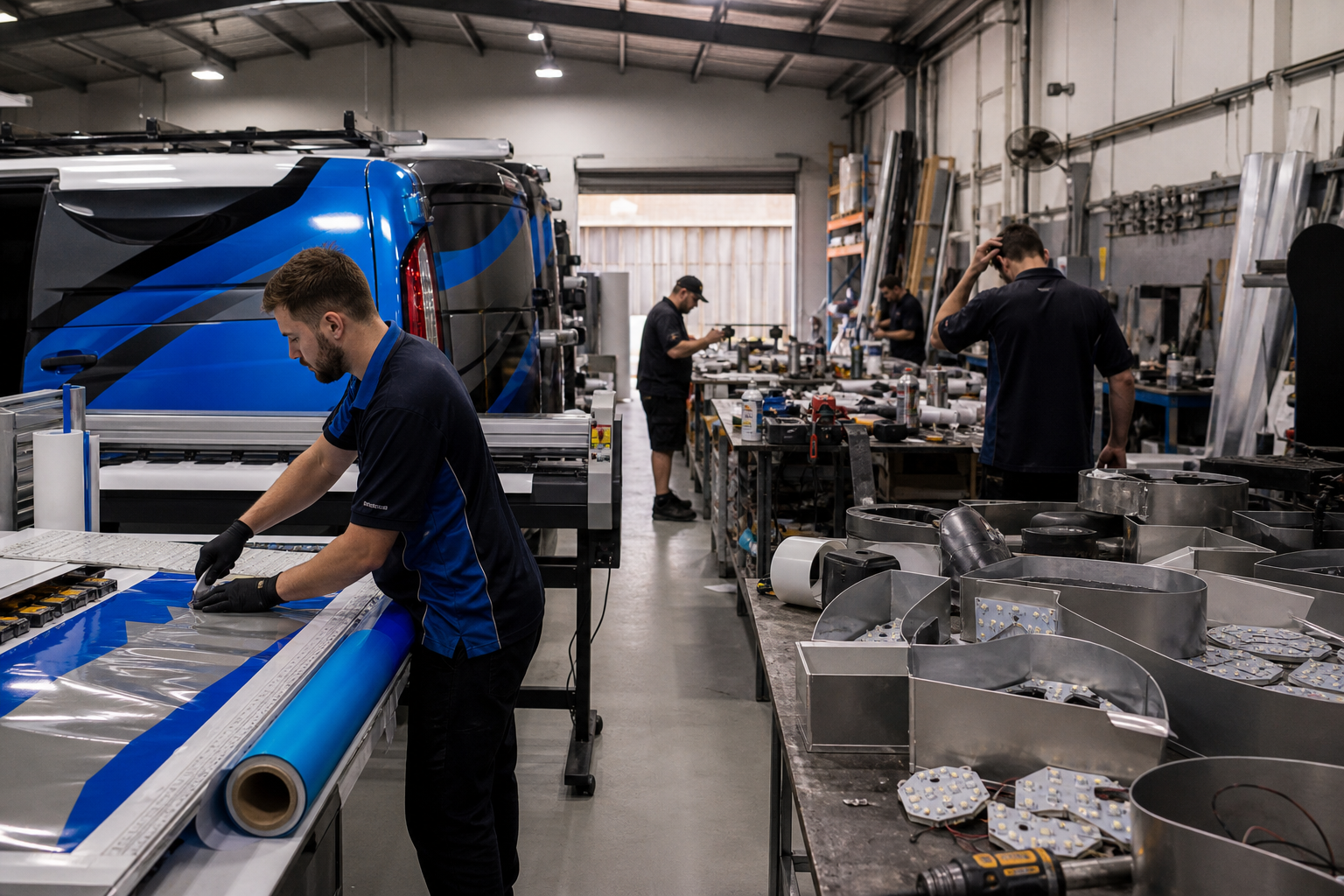
For many sign shops, bringing fabrication in-house starts with a simple idea: "Why pay someone else to build it when we could keep that margin ourselves?" On paper, it makes sense. You already have clients, staff, a workshop, and steady work coming through the door. Add the right equipment, teach the team, and fabrication should become another profitable service.
In practice, it is rarely that simple.
We have seen businesses that were strong, profitable, and well respected start to struggle after trying to pull every part of fabrication under their own roof. The problem was not a lack of ambition. It was that fabrication changed the whole shape of the business. Staff who were already busy producing vehicle wraps, vinyl, print, installs, and customer work were suddenly being asked to become metal fabricators, welders, electrical assemblers, estimators, and problem solvers for a trade they had not fully learned.
**The Equipment Is Only the First Cost**
A welder, folder, router, paint setup, extraction system, LED stock, acrylic inventory, fixings, benches, jigs, and extra floor space all cost money before the first job is complete. Then there are the less obvious costs: maintenance, consumables, failed test pieces, software, power, insurance, and the time spent getting a process repeatable.
That outlay is fixed whether the work is busy or quiet. A vehicle wrap bay or vinyl department can often turn work quickly with known margins. Fabrication is different. Jobs vary, materials behave differently, and small mistakes can consume hours. The equipment might look like an asset, but if it drags attention away from the work that already pays well, it can quietly become a liability.
**Fabrication Is a Learned Skill**
Good fabricated signage is not just cutting material and joining it together. It involves welding knowledge, material selection, LED layout, drainage, paint or powder coating, mounting methods, thermal movement, weather exposure, transport protection, and installation realities.
Welding is a clear example. A weld can look acceptable and still have poor penetration. Aluminium behaves differently from steel. Acrylic and metal expand differently. Electrical components need to be positioned so the sign can be serviced later. These details are learned through repetition, mistakes, and experience. When a shop tries to learn them on paid client jobs, the risk sits with the business owner.
**Staff Pressure Can Break a Good Workflow**
The biggest cost is not always equipment. It is often the pressure placed on people.
A team that is excellent at wraps, vinyl, print production, or installs may not want to become a fabrication team. Asking the same staff to take on complex metalwork, lighting, welding, and problem solving can create stress fast. Jobs take longer than quoted. Rework interrupts other production. Deadlines slip. Staff morale drops because the workday becomes harder, less predictable, and more frustrating.
We have seen this happen before: a profitable shop tries to do more in-house to save money, but the result is unhappy staff, missed deadlines, and dwindling numbers because the team is being stretched across too many trades at once.
**Bad Fabrication Does Not Fail Quietly**
Poor vinyl work is usually visible before it leaves the shop. Bad fabrication can fail later, after installation, when it is more expensive to fix. Letters can separate. Paint can fail. LEDs can run hot or patchy. Water can enter a sign. Mounting points can be wrong. A job that looked profitable can turn into site visits, replacement parts, awkward conversations, and damaged trust.
The client does not see the learning curve. They see your invoice, your brand, and your guarantee.
**Protect the Work That Already Makes You Money**
If your business is already profitable in vehicle wraps, vinyl, print, or installs, there is real value in staying focused there. Those departments have known workflows, trained staff, repeat customers, and established margins. Adding fabrication should not come at the cost of weakening the work that built the business.
Outsourcing fabrication lets you keep saying yes to bigger signage jobs without turning your shop into a metal fabrication business overnight. You quote the client, manage the relationship, and handle the install if that is your lane. We handle the fabricated components, the build details, and the production risk.
**Outsourcing Is Not Losing Control**
Some shops worry that outsourcing means giving up margin or control. Done properly, it is the opposite. You receive a clear scope, pricing, lead time, and components built for installation. You avoid the capital outlay, reduce risk, and free your team to stay productive on the work they do best.
The goal is not to stop growing. It is to grow without overloading the business.
**Let Fabrication Support Your Business, Not Consume It**
Bringing fabrication in-house can work when a business has the volume, staff, training, space, and management structure to support it. Without those things, the hidden costs can quickly outweigh the savings.
At Aussie 3D Fabrications, we build fabricated signage components for trade customers who want to quote more work without carrying the full burden of fabrication. If your shop is strong in wraps, vinyl, print, or installs, let that stay your profitable core. Send us the fabrication details, keep your client relationship, and let us handle the part that requires specialist equipment, process, and experience.
